We align with Oxford's Principles for Net-Zero Carbon Offsetting. Our portfolios are diversified across multiple project categories to mitigate risk while maximizing impact.
The purpose of this page is to provide a high-level overview of project types, along with common challenges and benefits — but each category consists of both high-quality and low-quality projects. It's important to perform due diligence and evaluate every project on its own individual basis.
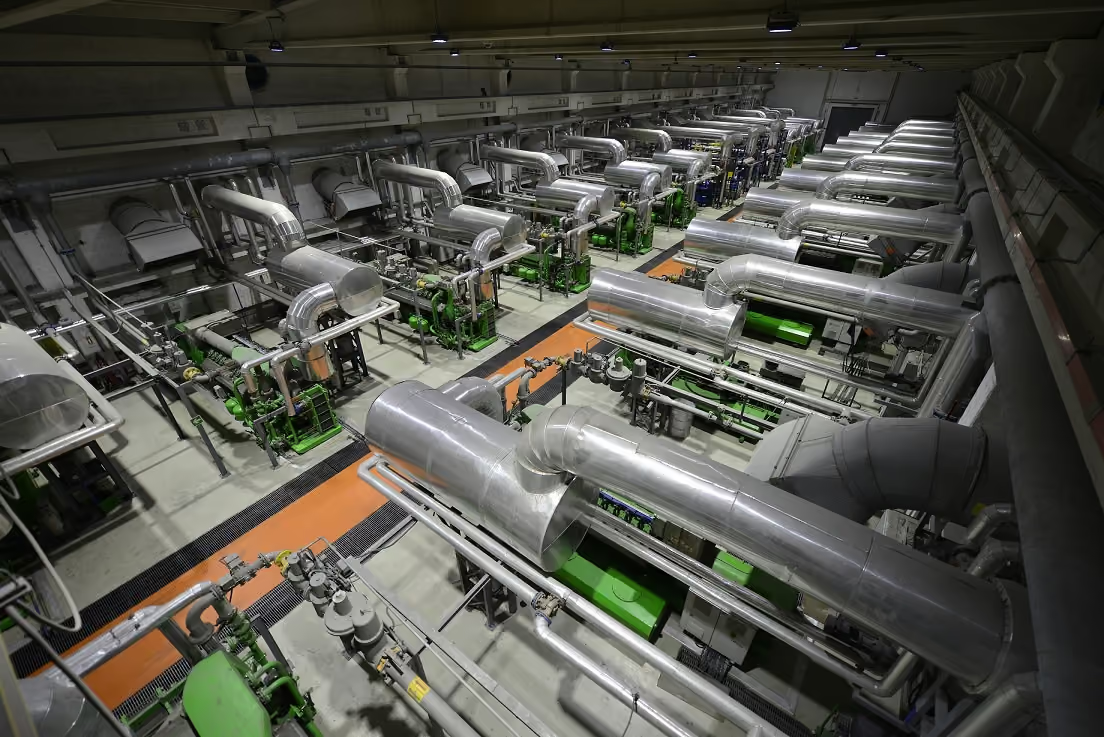
This category consists of projects that aim to reduce and avoid emissions with technology-based solutions.
Examples include: Landfill gas capture, Ozone-Depleting Substance (ODS) destruction, and renewable energy.


Actively curbing potent greenhouse gas emissions where they otherwise would occur is one of the most effective actions we can take today. Avoided emissions from this category are typically irreversible, and it's often straightforward to measure the exact amount of CO₂ avoided through project activity.
Additionality: Carbon credits only count as additional when the project requires credit funding to operate. If a project is already profitable without financing or is mandated by law, it's not additional — we're cautious of projects that don't meet this criterion (for example, some renewable energy projects).
Potential overestimation: Some projects might exaggerate their emission reductions by overestimating emissions that would have occurred without the program. We focus on projects with clear, transparent metrics.
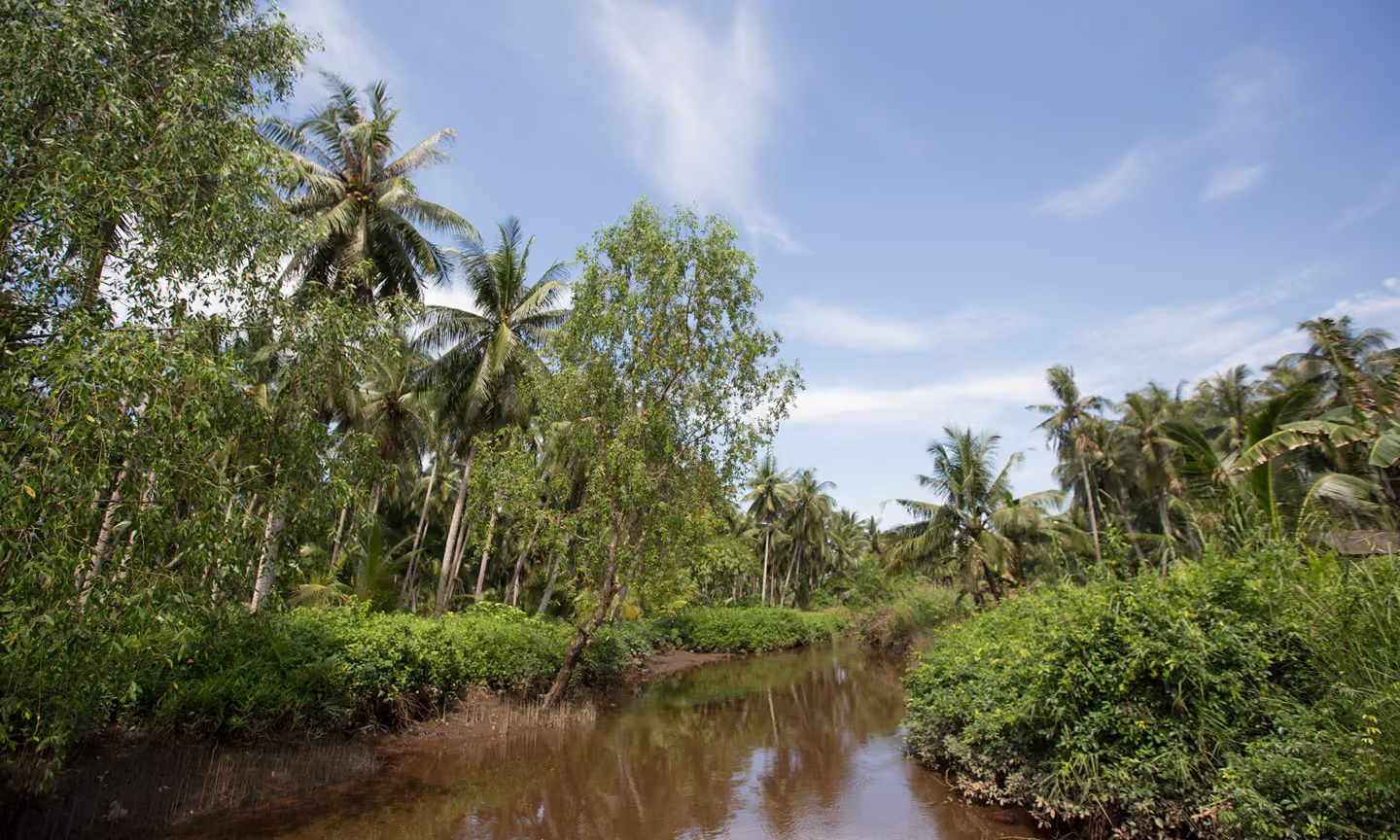
This category consists of projects that aim to reduce or avoid emissions with nature-based solutions, like retaining an existing source of natural carbon storage that would otherwise be at risk.
Examples include: Rainforest or peatland protection projects that avoid deforestation.


To mitigate the worst impacts of climate change, natural carbon reserves must be preserved to prevent their release into the atmosphere. These projects are already available at scale and can drive impact now.
Potential overestimation: Reduction projects can overestimate how much carbon would have been emitted if the project did not exist, and therefore overestimate impact. We focus on projects that use conservative methodologies.
Durability: Nature-based projects are susceptible to natural risks like fire and infestation, and can have impacts reversed once the project ends. We focus on projects that invest in risk reduction, like fire prevention and community stewardship.
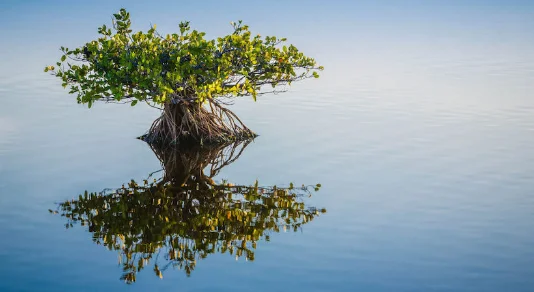
This category consists of projects that remove and store existing atmospheric carbon with nature-based solutions.
Examples include: Planting trees in an area that has been destroyed, or restoring plant life to tidal wetlands.


Ecosystems, especially plants, are the most efficient tools we have for atmospheric carbon removal. By investing in restoring degraded ecosystems around the world, we can harness nature's power to eliminate millions of tons of carbon.
Difficulty of implementation: Implementing an effective restoration or afforestation project is hard. Projects can face setbacks if new trees don't survive and need replanting, and new plantings can take years to start removing carbon at scale.
Durability: Young forests are far more susceptible to natural risks — fire, infestation — than healthy, mature forests. We focus on projects that invest in risk-reduction strategies like fire prevention and community stewardship.
This category consists of projects that remove and store existing atmospheric carbon with technology-based solutions, encompassing a broad range of cutting-edge engineered solutions. While they hold immense potential, many are still not available at scale.
Examples include: Direct air capture technology and enhanced rock weathering.


Leading science suggests that any pathway to avoiding the worst effects of climate change will require between 100 and 1,000 gigatons of carbon removal over the 21st century. This category represents the best opportunity to deliver gigaton-scale permanent removal by leveraging new technology.
Limited supply: These technologies have not reached operational scale, meaning they are limited in availability and immediate impact.
Technology risk: Technologies in this category are largely experimental, so there are not yet fully developed certifications and processes to measure and verify carbon removed.
Price: Because the technologies are subscale and experimental, credits from this category can cost hundreds or even thousands of dollars per ton.
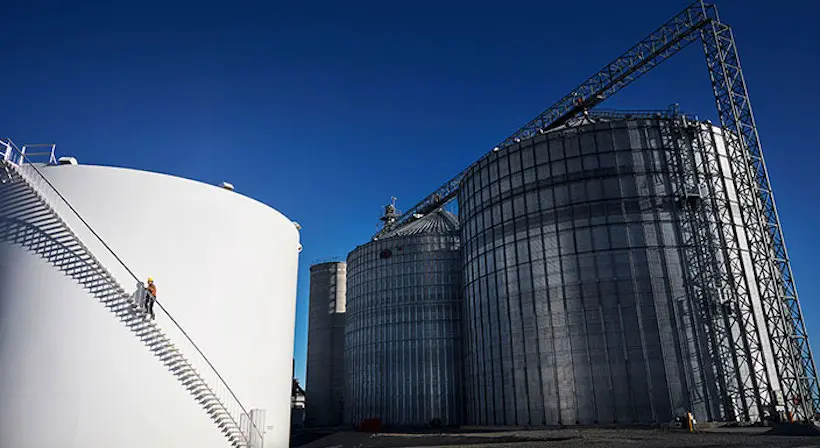
This category typically consists of industrial projects that capture carbon at the source, which is then stored for the long term — for example, capturing carbon at a smokestack and storing it in an underground cavern. These projects tend to be very expensive and unavailable.
CNaught portfolios are currently a blend of Categories I, II, IV, and V. As Category III projects scale and become more available, we will add them over time.


Capturing and sequestering CO₂ at major point sources of emissions is an efficient way to remove meaningful amounts of carbon from the atmosphere and thereby drive meaningful impact.
Additionality: Many of these projects, particularly in the U.S., benefit from tax credits, which means they likely would have occurred even without carbon-credit revenue — making them non-additional.
Efficacy: This technology is still in development; so far no single carbon capture and storage project has managed to reach its target CO₂ capture rate.
Cost: These projects are incredibly expensive to implement and have complex infrastructure requirements, so when their credits are available they will be very expensive.